SEO Consultant Grand Est - Expert & freelance
- The Grand Est is the largest region in mainland France, with unique SEO challenges stemming from its location at the tripoint with Germany, Luxembourg, and Belgium.
- A freelance SEO consultant based in the region understands the local nuances—industry, viticulture, tourism, cross-border markets—that a national SEO agency may not always be familiar with.
- Multilingual French-German SEO is a strategic tool that is underutilized by most companies in Alsace and Moselle, despite its considerable growth potential.
- The responsibilities of an SEO expert include technical audits, local SEO, seasonal content strategy, backlink building, and regular performance monitoring.
- I serve clients throughout the region: Strasbourg, Reims, Metz, Nancy, Mulhouse, Colmar, Troyes, Thionville, Épinal, Épernay, Châlons-en-Champagne, Verdun, and many other cities across the ten departments.
If you run a business in the Grand Est region, you’re operating in one of the most unique regions in France. The country’s leading industrial region, a European crossroads where three borders meet, a land of world-renowned vineyards, Christmas markets that attract millions of visitors, and cities with identities that are profoundly different from one another. Strasbourg thinks on a European scale. Reims lives to the rhythm of Champagne and its wine tourism. Metz and Nancy form a dynamic economic duo, rooted in services and industry. And yet, despite this real economic strength, many companies in the region remain invisible on Google. Every day, they lose potential customers to better-ranked competitors, without even realizing it. This is the problem I am committed to solving, with method, precision, and a genuine understanding of your region.
Why is SEO strategic for businesses in the Grand Est region?
A highly competitive region known for its industry, wine production, and tourism
The Grand Est region boasts an economic diversity that few other French regions can match. The automotive and chemical industries form the backbone of entire employment hubs in Mulhouse, Strasbourg, and Sarrebourg. Alsatian and Champagne viticulture enjoys international renown, with appellations such as Riesling, Gewurztraminer, and Champagne, which generate a remarkable volume of wine tourism. The Vosges, the Ballons Massif, and the Alsace Wine Route attract millions of visitors each year, with a distinct seasonal pattern that any SEO strategy must account for. Finally, logistics make the Grand Est a key hub for European freight, with companies in Metz, Reims, and Nancy seeking to position themselves in markets far beyond regional borders. This diversity is a strength, but it requires differentiated SEO approaches, tailored to the sector, geographic area, and the specific timing of each business.
The cross-border dimension: a unique SEO challenge in France
In my view, this is the most valuable aspect of the Grand Est region—and the one most underutilized by SEO providers who lack a detailed understanding of the area. Strasbourg is a bilingual city, where a significant portion of potential customers search in German as well as in French. Businesses in Moselle and the Ardennes have natural customers in Luxembourg and French-speaking Belgium. A service company based in Forbach or Thionville can legitimately target prospects in Saarbrücken or Luxembourg City if it has an SEO strategy tailored to these markets. These cross-border opportunities are real, well-documented, and yet virtually untapped by the vast majority of companies in the region. An SEO consultant who specializes in multilingual search engine optimization and understands the dynamics of the Franco-German or Franco-Luxembourgish markets can open doors for you that your competitors haven’t even thought to knock on yet.
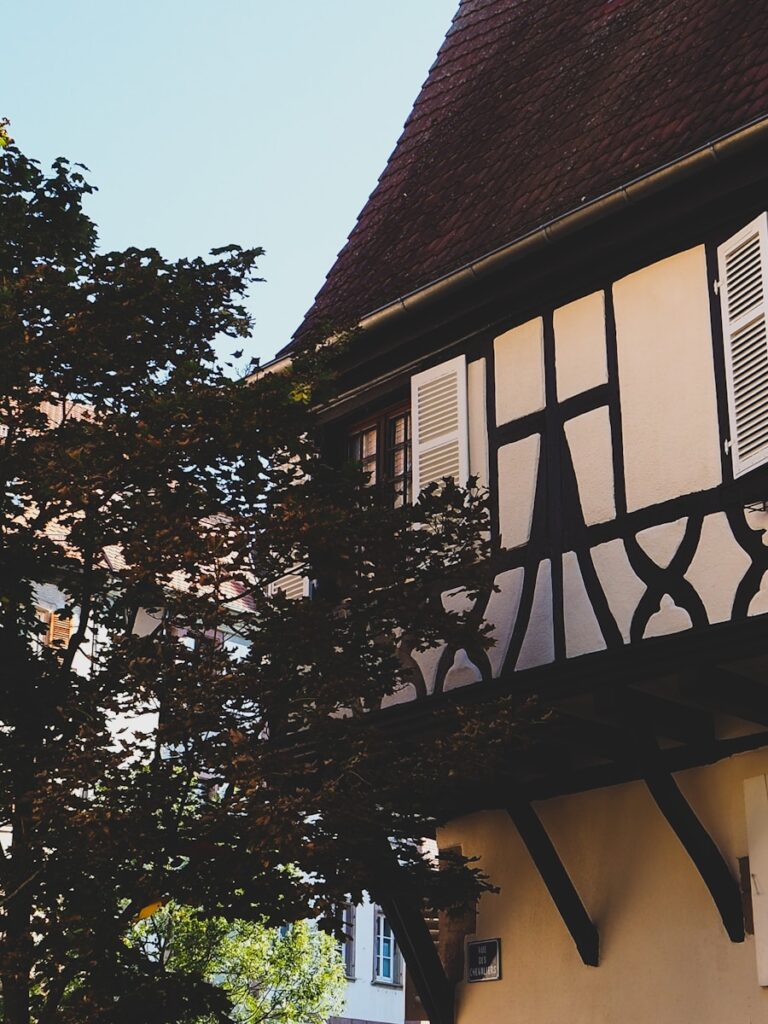
Major cities with very distinct economic profiles
I want to emphasize this point, because it directly determines the SEO strategy you should adopt based on your location. Strasbourg, home to the European Parliament and a bilingual city, generates sophisticated SEO demand driven by the digital sector, tourism, and institutions. Reims moves to the rhythm of Champagne, historical tourism, and a rapidly expanding logistics sector. Metz and Nancy form a dense metropolitan pair, where service-sector SMEs and industrial players coexist within a compact economic fabric. Mulhouse, in the midst of post-industrial redevelopment, is developing a dynamic entrepreneurial scene eager for digital visibility. Each of these cities requires its own unique SEO approach, and a consultant who treats the Grand Est region as a homogeneous bloc inevitably misses the realities on the ground.
What an SEO consultant actually does in the Grand Est region
Before we go any further, I want to clarify something essential. SEO is not a monolithic discipline: it is a set of complementary strategies that are organized according to a rigorous prioritization framework. Here is what I actually implement for the companies I work with in this region.
The technical and semantic SEO audit: an essential starting point
Every serious project begins with a comprehensive analysis of your website. A thorough SEO audit covers the technical structure (loading speed, indexability, URL architecture, title tags and meta descriptions, Schema.org structured data), semantic analysis (targeted keywords, cannibalization between pages, untapped search query opportunities), internal linking, and the backlink profile. This investigative work produces a precise roadmap, prioritized according to the potential impact of each action, and tailored to your actual resources and timeline. Without this initial assessment, any SEO action relies on intuition rather than facts. And in SEO, intuition comes at a high cost.
Local SEO: A Key Strategy for Regional Businesses and Service Providers
In a region as vast as the Grand Est, where there are many distinct local markets, local SEO is often the most cost-effective strategy in the short term for businesses with a local presence. This involves optimizing your Google Business Profile, ensuring the consistency of your NAP (Name, Address, Phone) information across all directories and platforms, and creating local pages optimized for your prospects’ geolocated search queries. Let’s take a concrete example: a carpenter in Colmar may remain hidden behind a competitor in Sélestat or Ribeauvillé, simply because the latter has carefully optimized their local signals. I methodically correct this type of imbalance, and the results are measurable often sooner than anticipated.
Multilingual SEO: A Grand-Est Specialty
This is an aspect I pay particular attention to when working with companies in Alsace and Moselle. Multilingual SEO is not simply a matter of translating your pages into German and publishing them as-is: it is a discipline in its own right, involving specific keyword research in each language, an adapted technical structure (hreflang tags, multilingual URL management), and a content strategy tailored to culturally distinct audiences. A German from Freiburg im Breisgau or a Luxembourger does not phrase their search query the same way as someone from Strasbourg, even for an identical need. Incorporating this nuance into your SEO strategy opens up markets that your competitors haven’t even begun to tap into yet.
An editorial strategy tailored to regional sectors
Publishing content without a prior semantic strategy is one of the most common mistakes I see among my clients when I start a project. A blog post written without a specific search intent, a generic service page with no local focus, a homepage text lacking industry-specific keywords: all of this not only yields no results but can also undermine your thematic authority in Google’s eyes. I build a customized semantic map for each client. For a tourism operator in Champagne, this means anticipating search spikes related to the grape harvest and wine tourism weekends starting in early fall. For a manufacturer in the Moselle Valley, this means targeting highly specific technical queries with strong conversion potential but low search volume. Each context deserves a tailored approach.
Netlinking to build domain authority
A website’s authority is built in part through backlinks from other sites. This is known as link building, and it’s a practice that requires both rigor and discernment. A low-quality link can harm your SEO just as much as a high-quality link can boost it. I select relevant, thematically consistent sources and systematically avoid any practices that could expose your site to algorithmic penalties. My approach is exclusively white hat, well-documented, and clearly explained in every monthly report.
Performance monitoring and regular reporting
SEO is an iterative process that evolves with Google updates, your competitors’ moves, and changes in your market. I provide regular, easy-to-read, results-oriented reports: changes in rankings for your target keywords, growth in organic traffic, conversion rates, and recommendations for the coming period. You’re never left in the dark about what’s being done and why. If an action doesn’t produce the expected results, I identify it, explain it, and make adjustments immediately.
Freelance SEO consultant or SEO agency: which should you choose in the Grand Est region?
This question comes up in every initial consultation, and I’m going to give you an honest answer—even if it doesn’t always work in my favor. The choice between a freelance SEO specialist and an SEO agency depends on the size of your business, your actual needs, and the type of working relationship you’re looking for.
What an SEO agency offers, and its structural limitations for regional SMEs
An SEO agency has a diverse team of professionals: copywriters, developers, backlink specialists, and project managers. For a large client with multiple, simultaneous needs, this model can be appropriate. On the other hand, for an SME in the Grand Est region with a modest budget and legitimate expectations for personalized support, working with an agency often means dealing with a constantly changing point of contact, hidden subcontracting, and a rate that includes overhead costs far more than the actual value produced for your site. This isn’t an absolute rule, but it’s a structural reality I’ve observed for years in this market.
Why freelancing is often the best choice in this region
Working with a freelance SEO consultant means choosing a single point of contact who is fully responsible for your project, from the initial audit to the final report. It’s a direct relationship, free from hierarchical barriers, that fosters responsiveness and mutual trust. For businesses in the Grand Est region, often located in smaller, more intimate economic hubs where direct relationships are key, this model resonates particularly well. I would add that expertise in the cross-border and multilingual SEO challenges specific to this region is a rare skill, one you’re more likely to find with an independent specialist than with a generalist SEO agency based in Paris or Lyon.
My personal and straightforward opinion on the matter
I’ll be blunt: for the vast majority of businesses in the Grand Est region—industrial SMEs, local shops, tourism operators, service providers, and winemakers seeking international visibility—a freelance SEO consultant is the best choice. Greater agility, more personal commitment, and the ability to adapt to local specifics—something that larger agencies can’t always offer. If you run a large organization with multi-site, multilingual, and multi-market needs, a structured agency may be more appropriate. But for everything else, a freelancer is, in my view, the most efficient option.
How do you choose the best SEO expert in the Grand Est region?
The SEO market is not immune to unethical practices, and I know this better than anyone. Promises of a top-ranking position within weeks, opaque methods, contracts with no performance metrics: these practices exist, and they tarnish the reputation of a profession that deserves better. Here’s how to distinguish a reliable SEO expert from a subpar service provider.
Specific and verifiable selection criteria
A good SEO consultant should be able to show you verifiable results on websites similar to yours. They should explain their approach clearly, without using jargon meant to impress you. They should be proficient in local SEO, and ideally in multilingual SEO if you operate in cross-border markets. They must use only techniques that comply with Google’s guidelines and provide you with proof of this. Finally, they must offer you a structured contract with explicit deliverables, a reporting schedule, and clear termination terms.
Key questions to ask before committing
Before committing to anything, I recommend asking these questions directly: Who will actually be managing my account on a day-to-day basis? Can I contact past clients to verify the results promised? What tools do you use, and will I have direct access to the reports? Do you have expertise in multilingual SEO if my market is cross-border? What is the minimum contract term, and under what conditions can I terminate the contract? A reputable service provider will answer these questions smoothly. If they hesitate or give vague, general answers, take that as a clear red flag.
Warning signs never to be ignored
There are three red flags that should make you walk away without hesitation: a guarantee of a top ranking on Google within a short timeframe (no one can legitimately promise that), a complete lack of transparency regarding the methods used, and the absence of a structured contract with defined deliverables. I would add a fourth warning sign, one that is more subtle but just as revealing: a service provider who does not ask for access to your Google Search Console from the outset is not working with your site’s actual data. In my view, this is a deal-breaker.
What a serious SEO contract should contain
A comprehensive SEO contract explicitly outlines the nature of deliverables, the frequency and format of reporting, shared tools, the minimum contract term along with renewal terms, and termination provisions. It also specifies who owns the content and the optimizations performed in the event the collaboration ends. This last point is often omitted and can lead to costly disputes if the relationship ends prematurely.
What is the budget for SEO in the Grand Est region?
This is invariably the first question that comes up in initial discussions. And I understand why: investing in SEO without knowing the rates is a legitimate cause for concern. Here is a rough price guide that reflects actual market rates for this region, with a specific line item for multilingual SEO, which is a special case.
| Type of service | Indicative range | Typical use case |
|---|---|---|
| Full SEO audit | 500 € - 2 500 € | Initial diagnosis, before redesign or after a drop in traffic |
| Monthly support | 600 € - 2 000 € / month | Ongoing support for SMEs with organic growth objectives |
| Daily service | 400 € - 900 € / day | One-time strategic consulting, training, internal co-management |
| Creating local pages | 120 € - 400 € / page | Multi-city or multi-sector local SEO strategy |
| Multilingual SEO (FR/DE) | €800 – €2,500 per month | Companies in Alsace and Moselle with cross-border operations |
These price ranges vary depending on the size of your website, the level of competition in your industry, and the geographic area covered. Multilingual SEO justifies a slightly higher budget than monolingual support, but the return on investment in cross-border markets—particularly Germany and Luxembourg—more than compensates for this difference in the majority of cases I have observed. My view is this: an underfunded SEO campaign produces incomplete results that discourage future investment. It is better to have a limited scope that is well-executed than an overly ambitious strategy carried out with insufficient resources.
Cities and territories covered by my SEO expertise
I provide services across all ten departments of the Grand Est region, either in person or remotely, depending on your preferences and the nature of the project. My coverage area extends from the plains of Champagne to the Vosges mountain ranges, from the banks of the Rhine to the plateaus of Lorraine, not to mention the border regions, which present specific SEO challenges.
Among the cities and areas I regularly accompany : Strasbourg and the Eurometropolis, Reims and the Marne, Metz and the Moselle, Nancy and Meurthe-et-Moselle, Mulhouse and the Haut-Rhin, Colmar and the Wine Route, Troyes and Aube, Charleville-Mézières and the Ardennes, Épinal and the Vosges, Thionville, Forbach, Sélestat, Saverne, Épernay, Châlons-en-Champagne, Bar-le-Duc and Verdun. I also work with companies based in rural areas, the Vosges valleys, or border towns whose natural markets extend well beyond France’s administrative borders. Distance has never been an obstacle to productive and rigorous collaboration.
Why should you entrust me with your SEO in the Grand Est region?
I have been a freelance SEO consultant for over seventeen years. I have worked with over 150 clients across a wide range of sectors: e-commerce, manufacturing, tourism, business services, healthcare, and local commerce. What sets me apart, I sincerely believe, is a combination of proven technical expertise, a commitment to clear communication, and a genuine understanding of regional economic challenges. I don’t seek to keep you in an artificial state of dependency by keeping my methods opaque: I explain every decision to you, involve you in strategic decisions, and ensure that you understand the levers we’re working on together.
Among the concrete results achieved for my clients: an 82% increase in organic traffic for Planet Puzzles, a 77% increase for FC Lorient, and a 45% increase for JDS Alsace. These figures are documented and verifiable. They demonstrate what a consistent, well-executed SEO strategy can achieve across very different contexts and industries. I will never promise you a specific ranking for a given keyword, because no one can legitimately do that. But I guarantee a rigorous approach, uncompromising transparency, and a sincere commitment to your growth goals, whether they are local, regional, or cross-border.
Are you looking for the best SEO consultant in the Grand Est region to boost your visibility on Google in the long term, including in the German and Luxembourg markets? Contact me today for an initial, no-obligation consultation. Together, we’ll conduct a detailed analysis of your situation, and I’ll identify the most effective strategies for your website, your industry, and your geographic goals.
The cities in the Grand Est region where I work