Netlinking: how long does it take to see the SEO impact?
Netlinking is a powerful SEO lever, but its temporality is often misunderstood. Let me be direct: the impact of backlinks is not felt overnight. The time it takes to see significant effects on your SEO generally varies from a few weeks to several months, depending on the quality of the links, the authority of the source sites and the competition on your target keywords. Understanding these timescales is crucial to adjusting your expectations and fine-tuning your strategy.
Netlinking remains a major pillar of SEO in 2026. And yet, its temporality still eludes many companies, who launch link campaigns without knowing when the results will come in.
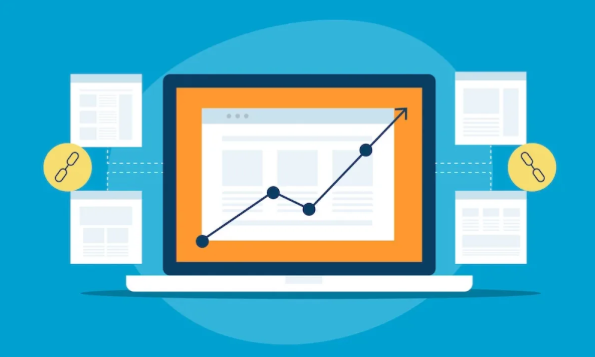
The time between a backlink appearing online and your positions actually moving varies enormously. Type of link, authority of the source site, level of competition on your target queries: each parameter influences the speed of impact. Depending on your strategy, you can expect a delay of between a few days and six months.
This article explains the different phases of netlinking, compares the timeframes between media links (Google News) and traditional links, and details practical techniques for accelerating your results.
What is the average impact of netlinking, depending on the type of link?
Not all backlinks produce their effects at the same rate. Specialists like Lucio from Agence Onze, netlinking experts and founders of the Link Finder, observe considerable variations depending on the type of link acquired. Here is a summary of average lead times in 2026 :
| Type of link | Average impact time | Explanation |
| Google News / media links | Within 7 days | Near-constant crawl, strong editorial authority, immediate E-E-A-T signal |
| Strong links (high DR/TF) | Within 2 months | Sites with a solid history, significant algorithmic weight but slower processing |
| Standard links (blogs, guest posts) | Within 3 months | Less frequent crawling, gradual take-up, cumulative effect |
Why do media links are they that fast? Google crawls these sites continuously, sometimes several times an hour. Indexing takes just a few minutes, and the domain's editorial authority sends an immediate signal of confidence.
Powerful links from high authority sites are an excellent compromise. Google gives them considerable weight, but the algorithm takes a few weeks to evaluate the editorial context and relevance of the link.
As for standard links (partner blogs, thematic directories, classic guest articles), their effect builds up gradually. Google crawls them less often, weights them more slowly, and their value materializes after two to three months. These times are still averages: the profile of your site and the difficulty of the targeted query change the equation.
Avoid the pitfalls of low-quality link solutions by learning more about cheap backlinks and their potential risks.
The 3 phases of netlinking: from indexing to impact on rankings
The path between posting a backlink and gaining positions follows a three-step process.
Phase 1: Google indexes the link
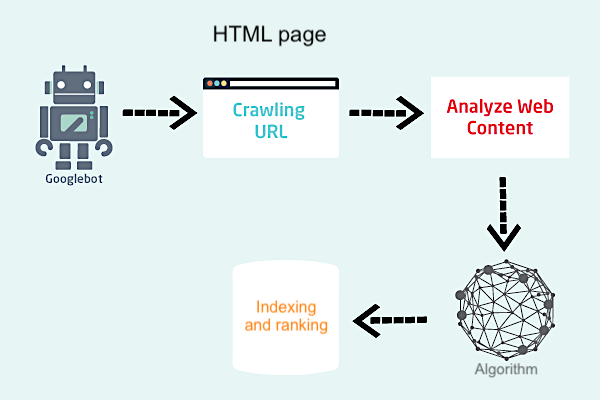
Google must first discover the page containing your backlink. A constantly crawled media site will see its page indexed in a matter of hours. A low-traffic blog? Count on several days, even weeks.
You can speed up this step using the URL inspection tool in Google Search Console. Third-party solutions can also ping URLs to attract Googlebot's attention more quickly.
Phase 2: Algorithmic consideration of the link
Once the page is indexed, Google evaluates the link. Source domain authority, thematic relevance, editorial context, type of anchor used: each criterion is included in the calculation.
This phase generally lasts from two to eight weeks. In 2026, Google will no longer reason link by link. The algorithm analyzes your global link profile, anchor families, and the thematic coherence of the whole. An isolated link carries less weight than one that is part of a coherent profile.
Phase 3: Measurable impact on positions
This is the visible phase: your positions in the SERPs rise and organic traffic increases. According to published data by MOZ, A standard link follows this pattern: slight effect between weeks 1 and 10, acceleration between weeks 11 and 17, full effect achieved between weeks 18 and 22.
To optimize your strategy and understand the effectiveness of your efforts, it is crucial to carry out a backlink analysis regular.
The impact is cumulative. The more regular and diversified your campaign, the greater the acceleration. A crucial detail: sites positioned between 9th and 20th benefit more quickly from new links than those already in the top 5.
Media links and Google News vs. classic links: what's the difference in impact?
Sites integrated into Google News benefit from a almost permanent crawl. Googlebot visits these domains several times an hour, making indexing of their pages almost instantaneous. A backlink placed in an online press article becomes active within minutes.
Beyond speed, these links transmit an extremely powerful editorial authority signal. Google considers recognized media as reliable sources, which directly boosts the E-E-A-T score of the receiving site. It's a premium vote of confidence.
In 2026, the value of these links goes beyond classic SEO. Media serve as priority sources for generative engines (AI Overviews, ChatGPT, Perplexity). A link from a recognized medium boosts your visibility in these new channels. Check, however, that the media outlet has not blocked AI crawlers in its robots.txt, otherwise the link will remain invisible to LLMs.
Classic links (specialized blogs, partner sites, thematic directories) are still very useful. Their effect simply takes longer to manifest itself, as Google crawls and weights them more slowly. The winning strategy? Mix the two. Visit media links bring a quick boost, while standard links build a natural, long-term profile.
What factors speed up or slow down netlinking results?
Some parameters save weeks. Others considerably lengthen the wait. So we asked Lucio Laria, one of France's leading netlinking experts, explains:
This speeds up results:
- Regular acquisition frequency (a few links each month rather than a one-off large batch)
- The strong authority and thematic relevance donor sites
- Good technical health of the receiving site (speed, clean architecture, no crawl errors)
- Solid content on the target page that perfectly matches search intent
What hinders impact:
- Fierce competition on the target query
- A recent recipient site with little history and an almost empty link profile
- Poor on-page optimization of the target sheet
- A non-existent internal mesh that prevents link juice from circulating
An often overlooked point: a backlink amplifies what already exists. If your target page lacks content or misses search intent, even a powerful link will produce little effect.
Volume counts too. Acquiring 20 links over a given period produces much faster and amplified effects than a single link. Sites that have been established for several years also absorb the value of new backlinks more quickly than newer domains.

Best practices for accelerating the impact of your netlinking campaign
Force indexing and build tier 2 links
Don't let Google discover your backlinks by accident. Take the lead.
- Request submission of the page containing your backlink via URL inspection in Google Search Console if it is not indexed quickly
- Create tier 2 links point additional backlinks to the pages hosting your main links, to accelerate their crawl and reinforce their transmitted authority.
- Ping the URLs of pages containing your backlinks with dedicated indexing tools
- Share articles containing your links on social networks to multiply points of discovery
Tier 2 links remain an under-exploited technique. By strengthening the page that links to you, you amplify the signal that it transmits to your site. It's a powerful multiplier effect when done right.
Optimize content and diversify sources
Before launching a link campaign, make sure your target page is flawless. Thorough content, perfectly served search intent, semantic cocoon, strong internal mesh These prerequisites determine the effectiveness of each backlink received.
Diversify your sources. Media, specialized blogs, forums, brand mentions: a varied profile looks more natural in Google's eyes and generates better algorithmic valuation. Vary your link anchors too. Exceeding 60% of exact anchors sends a artificial signal that Google makes easy to find.
Maintain a monthly rhythm rather than massive one-off campaigns. In 2026, think Mention Building too: mentions of your brand without hypertext links reinforce your entity in the eyes of Google and LLMs. It's a complementary lever too often ignored.
FAQ
How many backlinks does it take to make an impact in SEO?
There are no magic numbers. A single link from a powerful medium can outweigh the effect of 50 low-quality links. On average, a regular campaign of 5 to 15 quality links per month produces visible results within two to three months, depending on the competition and the authority of your site.
Can a single link improve my Google ranking?
Yes, as long as it comes from a site with very high authority in your exact topic. According to MOZ, a single link takes around 18 to 22 weeks to reach its full effect. The impact also depends on your starting position: a site in 15th position will benefit more than one already in 3rd.
Do nofollow links have an impact on SEO?
As of 2019, Google treats the nofollow attribute as a hint, not as a strict guideline. A nofollow link from a high-authority site can convey a positive signal, especially in terms of brand mentions. Aim for a natural profile that mixes dofollow and nofollow links.
Should you continue netlinking once the results are in?
Absolutely. Your competitors continue to acquire links. An abrupt halt will lead to stagnation and gradual erosion of your positions. Maintain a steady rate of link acquisition to consolidate and defend your rankings over the long term.
Personalized, no-obligation analysis, response within 24/48 hours with 3-5 concrete quick wins.
150 entrepreneurs have already put their trust in us
🔒 Your data is never shared with third parties
